Abayas, Attitude, and American Streets: The Modest Fashion Revolution Nobody Saw Coming
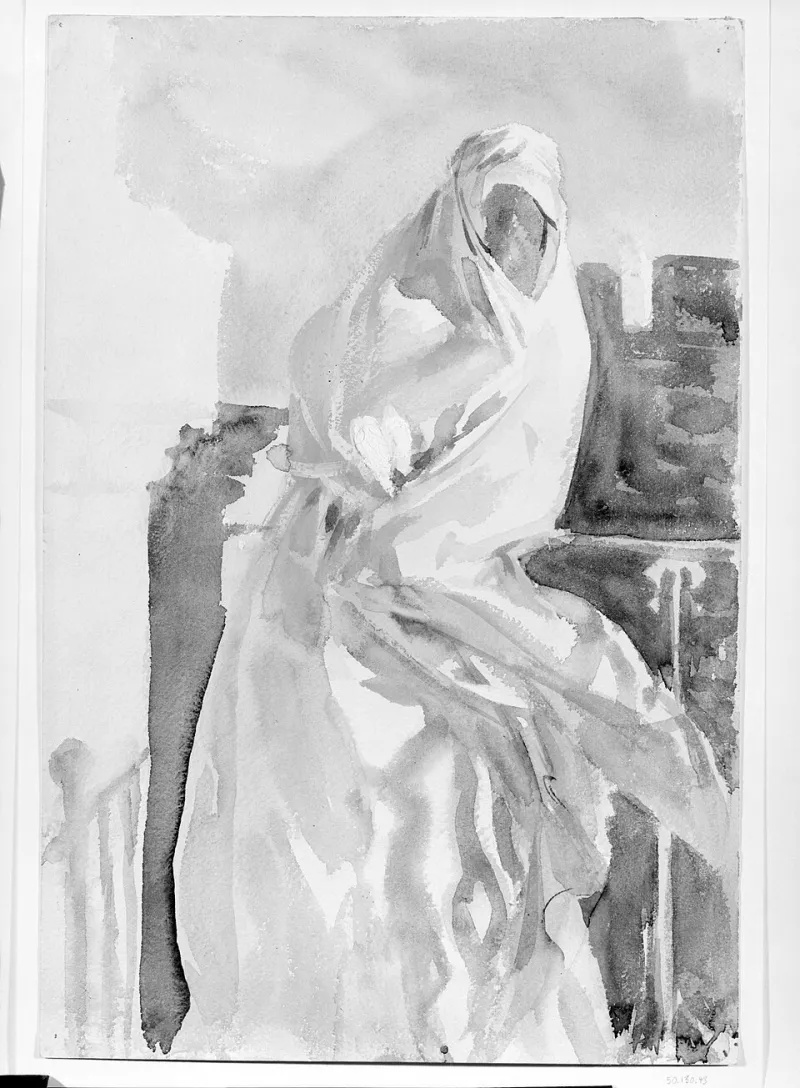
Photo: John Singer Sargent, CC0, via Wikimedia Commons
Not Your Grandmother's Abaya (Or Maybe Exactly That — But Make It Fashion)
There's a moment that Dina Khalil, a 29-year-old fashion buyer from Chicago, describes as a turning point. She was walking through the West Loop on a Saturday morning, wearing a slate-gray open-front abaya over a fitted turtleneck and wide-leg trousers, when a woman she didn't know stopped her to ask where she got the coat.
"She thought it was a designer duster," Dina told us. "I explained it was actually an abaya from a small brand out of Dubai that ships to the US. She literally pulled out her phone right there."
That interaction — small, sidewalk-level, completely unscripted — captures something important about where modest fashion is right now in America. It's moved from being a category defined by what it avoids (showing skin, fitted silhouettes) to one defined by what it offers: intention, craftsmanship, and a visual language that feels genuinely distinct from the oversaturated mainstream.
What "Modest Fashion" Actually Means in 2025
Let's clear something up, because the term gets flattened a lot: modest fashion isn't a single aesthetic, a religious requirement, or a trend. It's a broad, diverse approach to dressing that prioritizes coverage and often — though not always — reflects personal, cultural, or spiritual values. Arab women have been its most visible architects in the US, but the audience has always been wider.
For many Arab-American women, modest dressing is less about following a rulebook and more about navigating identity on their own terms. Fatima Al-Rashid, a Houston-based fashion entrepreneur who runs a small modest wear label called Warda Studio, puts it plainly: "I'm not dressing for modesty instead of style. I'm dressing with both at the same time. That's always been possible — Americans are just noticing now."
Warda Studio launched three years ago with a capsule collection of structured hijabs in unexpected textures — boucle, ribbed cotton, even a limited-edition silk charmeuse — and has since expanded into coordinated sets and outerwear. Her pieces are stocked on سوق البنات and regularly sell out within days of restocking.
The Designers Rewriting the Rules
The Arab designers reshaping modest fashion for American consumers aren't working from a single playbook. Some are leaning into minimalism — clean lines, neutral palettes, the kind of pieces that photograph well on a Brooklyn fire escape. Others are going full maximalist, bringing the embroidery, beading, and draping techniques of their home countries into contemporary silhouettes.
A few names worth knowing:
Hana Al-Mulla (Kuwait-born, LA-based) built her brand around what she calls "the power suit of modest fashion" — structured blazer-length abayas that work in boardrooms and at brunch with equal ease. Her pieces have been worn by Arab-American professionals who want to stop choosing between looking authoritative and dressing according to their values.
Mariam Tahir (Egyptian-American, based in New York) takes a completely different approach, blending vintage American sportswear references with traditional Egyptian textile patterns. Her hijab styling videos on Instagram have amassed a following that skews surprisingly young and non-Arab, because the looks she creates feel genuinely fresh.
Noor Collective, a group of three Jordanian-American sisters out of Dearborn, Michigan, started as a social media account sharing outfit inspiration and evolved into a full e-commerce brand. Their approach to layering — long skirts over wide-leg pants, oversized linen shirts under structured vests — has influenced a broader conversation about layered dressing that has nothing to do with modesty specifically.
Real Women, Real Wardrobes
Beyond the designers, the most compelling story of modest fashion in America is playing out in everyday wardrobes. We talked to several Arab-American women across the country about how they navigate fashion choices and what's changed.
Sarah Nasser, 34, a nurse practitioner in Dearborn: "When I was in college, I felt like I had two options — dress like everyone else or look like I was trying to make a statement. Now there's actually a middle ground. I can wear something that reflects who I am and also just looks good."
Laila Hamed, 26, a graduate student in Austin: "I wear hijab but I also love streetwear. I've built my whole wardrobe around oversized hoodies, cargo pants, and really great sneakers. The modest fashion world has gotten way more comfortable with that aesthetic. It doesn't all have to be flowy and formal."
Reem Khalaf, 41, a small business owner in New Jersey: "I think the biggest shift is that stores are actually carrying things I can wear now. Not everything, but more. And when they don't, I know where to shop online." (She mentioned سوق البنات specifically, which, yes, we appreciated.)
Styling Tips That Actually Work
If you're building or refining a modest wardrobe for American daily life, here's what our editors and community have found genuinely useful:
Invest in outerwear. A well-cut long coat or duster does more heavy lifting than almost any other piece. It can make even a simple outfit look intentional.
Play with proportions. Modest dressing doesn't mean shapeless. Try a fitted top with a wide-leg trouser, or a structured midi skirt with a relaxed knit.
Texture is your best friend. When you're working with more coverage, interesting fabrics — ribbed knits, linen, jacquard — add visual interest that keeps looks from falling flat.
Don't sleep on monochrome. Head-to-toe tonal dressing is effortlessly chic and incredibly practical for hijabi styling in particular.
Vintage and thrift are underrated. Older American fashion often leaned toward longer hemlines and less body-conscious cuts. Thrift stores are full of pieces that work beautifully in a modest wardrobe.
The Bigger Picture
Modest fashion's rise in American mainstream culture isn't just a style story — it's a story about whose aesthetics get to be considered elegant, whose values get to be visible in public space, and who gets to define what "dressing well" means.
Arab women have always known how to dress. America is just catching up.
Explore our modest fashion collection at سوق البنات — featuring pieces from Arab-founded labels, international modest wear brands, and everything you need to build a wardrobe that's entirely, unapologetically yours.