Under the Wrap: The Real Talk on Hijab Hair Health and Why Arab Women Are Done Ignoring It
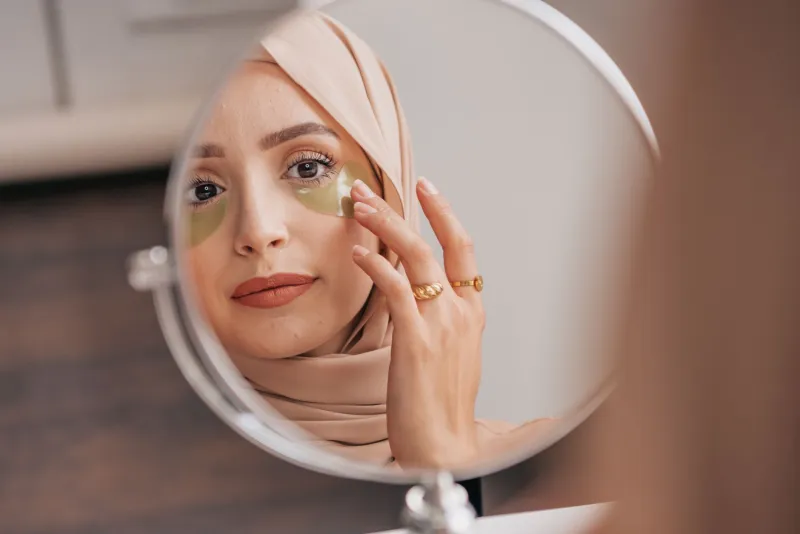
Let's be honest — the beauty industry has spent decades talking about hair. Glossy campaigns, curl manifestos, bond-repair serums that cost more than rent. But somewhere in all that noise, a massive demographic got left out of the conversation entirely: hijab-wearing Arab women navigating hair and scalp health in America.
And the silence? It's been loud.
Between the climate whiplash of moving from the Middle East to, say, Houston in August or Chicago in January, the friction of fabrics against strands all day, and the generational habit of loading up on heavy oils and butters before wrapping — there's a full-on hair crisis quietly unfolding under the hijab. But here's the thing: Arab women aren't just suffering through it anymore. They're building solutions.
What's Actually Happening to Your Hair Under There
First, let's talk science — because understanding the problem is half the battle.
When hair is covered for extended periods, airflow is restricted. That means sweat, sebum, and product buildup accumulate on the scalp faster than they would otherwise. In humid climates like Florida or coastal Texas, this creates the perfect environment for fungal overgrowth, which can lead to dandruff, itchiness, and even hair thinning over time. In drier climates like the American Southwest or during brutal Midwest winters, the opposite happens — scalps become dehydrated, leading to flakiness and increased breakage.
Dr. Nadia Haddad, a dermatologist based in Dearborn, Michigan — home to one of the largest Arab American communities in the country — says she sees these issues constantly in her practice. "My patients often come in thinking they have a single problem, but it's usually a combination of factors," she explains. "Scalp pH is disrupted, the hair shaft is weakened from constant friction, and on top of that, many of my patients are still using the same heavy olive or argan oil routines their mothers taught them — which aren't always appropriate for the American climate or water quality."
That last point hits different. Hard water, which is common across much of the US, leaves mineral deposits on hair that can make it feel perpetually gunky — and when you're already dealing with limited airflow, that buildup compounds fast.
The Traditional Remedies Getting a Modern Makeover
Here's where it gets interesting, because Arab women aren't abandoning their roots — they're remixing them.
Black seed oil (حبة البركة), a staple in Arab households for centuries, is having a serious renaissance in American beauty circles. Brands like Taliah Waajid and a growing number of indie Arab-founded labels are reformulating it into lightweight scalp serums rather than the thick, heavy oils that can suffocate follicles. The active compound, thymoquinone, has genuine research behind it for promoting hair growth and reducing inflammation — and when it's suspended in a lighter carrier, it works with modern hair routines instead of against them.
Rosemary water mists — another nod to traditional Arab herbal medicine — are showing up in Etsy shops run by Arab American women who are blending them with Yemeni sidr honey and green tea for scalp sprays that hydrate without weighing hair down. These aren't just cute small-batch products. They're practical answers to a real problem, and they're selling out.
Fenugreek (حلبة) paste, used across the Arab world and South Asia for hair strength, is being repackaged into wash-day masks designed specifically for women who want to treatment their hair before covering it. The idea: do the heavy lifting on wash day so your hair is fortified enough to handle a week of being wrapped.
Fabric Matters More Than You Think
One thing that almost never comes up in mainstream hair conversations? The role of hijab fabric in hair damage.
Cotton, while breathable, creates friction that roughens the hair cuticle over time — especially for women with naturally wavy or curly Arab hair textures. Polyester and synthetic blends trap heat and moisture. Silk and satin-lined wraps, on the other hand, dramatically reduce friction and help hair retain moisture.
Sarah Al-Amin, a beauty content creator based in Chicago who documents her hijab hair journey to over 80,000 followers, swears by satin underscarves as the single biggest game-changer in her routine. "I went from losing chunks of hair every time I took off my hijab to barely seeing any breakage," she says. "No product fixed that — it was literally just switching the fabric touching my hair."
Satin bonnets worn overnight, a tip borrowed from the natural hair community, have also become standard practice for many Arab women who want to protect styles between wash days.
Building a Hijab-Friendly Hair Routine That Actually Works
So what does a practical, effective routine look like for hijab-wearing women in the US? Here's a loose framework that beauty experts and community voices keep coming back to:
Wash day (1-2x per week depending on sweat and activity level):
- Start with a scalp-focused clarifying shampoo to remove mineral and product buildup. Look for chelating formulas if you're in a hard water area.
- Follow with a moisturizing conditioner focused on the mid-lengths and ends, not the scalp.
- Apply a strengthening treatment like a fenugreek or protein mask once a week.
Between wash days:
- Use a lightweight scalp spray — rosemary water, diluted tea tree, or a commercial scalp tonic — to keep things fresh without full washing.
- A tiny amount of lightweight oil (jojoba, black seed in serum form) on the ends only helps with moisture retention.
- Satin underscarf, always.
Overnight:
- Loose braid or low bun to minimize tension.
- Satin bonnet or pillowcase.
- Skip heavy oils at night if you're prone to scalp buildup.
The Market Is Waking Up — Slowly
Major beauty retailers are beginning to take notice. Ulta has expanded its selection of scalp-care tools and treatments, and while none are explicitly marketed toward hijab-wearing consumers yet, the infrastructure is there. Arab American beauty entrepreneurs are filling the gap in the meantime, and frankly, they're doing it better.
At سوق البنات, we've been watching this space closely — because this is exactly the kind of community-driven, culturally specific beauty innovation that deserves a spotlight. The women building these solutions aren't waiting for Sephora to greenlight them. They're starting their own brands, sharing their own tutorials, and passing down updated versions of their grandmothers' recipes.
The hijab hair conversation is no longer just a whisper between sisters. It's becoming an industry — and it's about time.