Curves, Culture, and Couture: The Arab American Designers Dressing Every Body
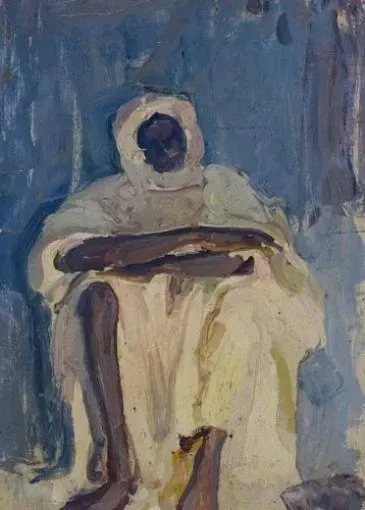
Photo: Henry Ossawa Tanner, Public domain, via Wikimedia Commons
For too long, "modest fashion" and "size-inclusive fashion" existed in parallel conversations that rarely intersected. Modest brands would offer coverage without celebrating shape. Plus-size brands would offer size range without cultural fluency. Arab American women with fuller figures were left navigating a market that either ignored them or offered them an afterthought.
That's changing — and the designers driving that change are telling a very different story about who fashion is for.
The Gap That Launched a Movement
Ask any Arab American plus-size woman about her relationship with fashion and you'll hear a version of the same story: the search for something that fits the body, covers what she wants covered, doesn't look like a costume, and actually feels like her. For years, that combination was nearly impossible to find off the rack.
The mainstream modest fashion market, even as it expanded, often defaulted to a narrow size range and an even narrower aesthetic vocabulary. The assumption — implicit but pervasive — was that modest dressing was for one kind of body. Arab American designers who came up in that environment made a decision: if the market wasn't going to serve their communities, they'd build something better.
Design as a Political Act
For many Arab American designers working in the plus-size and modest space, the work is personal before it's professional. They're not designing for a demographic — they're designing for their mothers, their sisters, their cousins, themselves.
That intimacy shows in the construction details. Designers who understand the specific needs of fuller figures in modest dress know that a flowing abaya cut for a straight size 6 frame does not automatically translate to a size 18. The drape changes. The shoulder seam placement matters differently. The way fabric falls over a fuller bust requires different construction at the yoke. These aren't small adjustments — they're architectural decisions that require either lived experience or genuine commitment to getting it right.
The Arab American designers leading this space tend to have both.
What Size Inclusivity Actually Looks Like in Practice
It's worth being specific about what real size inclusivity requires, because the fashion industry has a habit of calling anything above a size 12 "inclusive" while stopping at 16 and calling it a day.
The designers making waves in this space are extending their size ranges to 3X, 4X, and beyond — and they're doing it without a "plus-size line" that exists separately from the main collection. The same embroidered kaftan, the same structured abaya, the same hand-dyed silk wrap: available in every size, photographed on models who actually wear those sizes, marketed without the qualifier.
That approach matters symbolically as much as practically. When a brand presents its full size range as one cohesive collection rather than a segregated extension, it communicates something specific to the customer: you are not an add-on. You are the collection.
Cultural Fluency as a Design Tool
One of the things that distinguishes Arab American designers in this space is their ability to translate cultural aesthetics into contemporary silhouettes that work across body types. Traditional garments like the kaftan, the jalabiya, and the abaya already have structural DNA that lends itself to size inclusivity — they're built around drape, movement, and ease rather than rigid tailoring.
The skill is in modernizing those silhouettes without losing what makes them meaningful. A kaftan with updated proportions, tonal embroidery, and a fabric weight that photographs beautifully under US lighting conditions — that's not a costume and it's not a compromise. It's cultural fluency applied to design.
Arab American designers understand intuitively that their customers are navigating multiple identities simultaneously. The woman buying a special-occasion abaya for an Eid gathering in New Jersey also wants to feel current, not costumed. The designer who can hold both of those truths in the same garment has something genuinely valuable to offer.
The Mainstream Is Watching — Finally
The timing matters. The US fashion industry has spent the last several years under significant pressure to diversify — in size range, in cultural representation, in who gets to design and who gets to model. Arab American plus-size designers were already doing the work long before it became a conversation. Now, the mainstream is paying attention.
That attention comes with complications. There's the very real risk of larger brands appropriating the aesthetic without engaging the community — taking the kaftan silhouette or the embroidery motif without crediting the cultural context or supporting the designers who built the market. Arab American fashion creators are increasingly vocal about this dynamic, using their platforms to draw clear lines between appreciation and extraction.
But the attention also creates opportunity. Buyers who once passed on modest plus-size collections are now actively seeking them. Stylists who wouldn't have pulled these pieces for editorial shoots are now calling. The market is catching up — slowly, imperfectly, but meaningfully.
What to Shop and Why It Matters
Supporting Arab American designers in the plus-size modest fashion space isn't just a feel-good choice — it's a market signal. When you buy from brands that center size inclusivity and cultural authenticity, you're telling the industry that this combination is commercially viable. That matters for every Arab American woman who comes after you.
At سوق البنات, we're committed to featuring and amplifying these brands — not as a niche category, but as a core part of what Arab fashion looks like in the US today. Because it does look like this: embroidered, draped, confident, full, and entirely unapologetic.
The designers building this space aren't waiting for the industry to make room. They're building their own rooms and inviting everyone in.