Your Signature Scent Is a Statement: The Arab American Woman's Guide to Investing in Oud
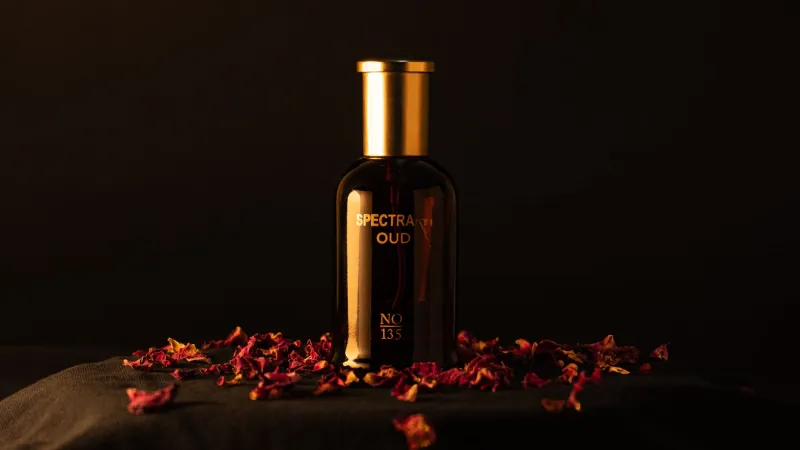
Ask an Arab woman about her mother's perfume and watch her expression change. There's almost always a specific scent — heavy, warm, probably oud-forward — that lives permanently in sensory memory. It's the smell of Friday family lunches, of someone's abaya brushing past you in a hallway, of a hug that felt like home. Fragrance in Arab culture isn't an accessory. It's a language.
And right now, in the US, Arab American women are investing in that language more deliberately than ever — not just as nostalgia, but as identity, luxury, and a very intentional form of self-expression.
Why Oud Is Having Its Moment in the US
Oud — the resinous heartwood of the agarwood tree, used in perfumery for centuries across the Middle East, South Asia, and East Asia — has been circling the edges of Western fragrance for years. Tom Ford's Oud Wood brought it into mainstream luxury consciousness. Mainstream retailers started carrying "oud-inspired" scents. The word itself became a kind of shorthand for opulence.
But for Arab American consumers, the oud conversation is different. It's not a trend discovery. It's a homecoming.
"I grew up with oud burning in my parents' house," says Rima, a 28-year-old marketing director based in Dearborn, Michigan. "When I started buying my own fragrances in college, I kept gravitating toward oud-based perfumes without fully understanding why. It was years before I connected the dots — I was literally chasing a scent memory."
That emotional architecture is exactly why niche Arab perfumery has such a dedicated following among diaspora communities. The scents aren't just beautiful — they're connective tissue.
Understanding the Language of Arab Fragrance
Before you can invest wisely, it helps to understand how Arabic perfumery actually works — because it operates on a different philosophy than Western fragrance traditions.
Layering is the foundation. Arab fragrance culture is built around the idea that scent should be complex and personal — which means you're rarely just wearing one thing. The traditional approach involves applying oud oil directly to skin (pulse points, the wrists, behind the ears), then spraying an eau de parfum over it, and sometimes burning bakhoor (scented wood chips) in your clothing or hair. The result is a scent that's entirely your own combination.
Concentration matters. Arab perfumes tend to be formulated as extrait de parfum or pure parfum — the highest concentration levels, meaning they last longer and project more richly than the eau de toilette most Americans are used to. A small amount goes a long way, which is part of why a quality Arabic perfume, despite its higher price point, can actually be more economical over time.
The base notes are the point. Western fragrance often leads with bright top notes that fade quickly. Arab perfumery tends to prioritize the base — the oud, the amber, the musk, the rose — because the goal is a scent that deepens and develops over hours, not one that makes a quick impression and disappears.
The Brands Arab American Women Are Actually Buying
The niche Arab fragrance market in the US has expanded significantly in the last five years, and there are a few names that consistently come up in community conversations.
Amouage (Oman) remains the benchmark for Arab luxury perfumery in the Western market. Their fragrances are formulated with exceptional quality and carry a storytelling depth that rewards the wearer. Interlude Woman and Memoir Woman are particular favorites among Arab American fragrance enthusiasts.
Arabian Oud is the world's largest Arabic perfume retailer and has a growing US presence. Their oud oils in particular are considered exceptional value for quality — a great entry point if you're new to pure oud.
Maison Francis Kurkdjian's Oud Silk Mood bridges the Arab fragrance tradition and French perfumery in a way that works beautifully for women navigating multiple cultural aesthetics.
Smaller, independent Arab perfumers are where the most interesting things are happening right now. Brands founded by Arab American women — some of whom are now selling through platforms like سوق البنات — are creating fragrances that speak specifically to the diaspora experience: scents that reference both the Middle East and American life, both heritage and aspiration.
Fragrance as Cultural Reclamation
There's a political dimension to this that's worth naming. When a multi-billion-dollar Western fragrance industry spends years borrowing oud aesthetics without crediting or sourcing from the cultures that developed them — and then sells those "oud-inspired" products back to consumers at luxury price points — it's a form of extraction.
Arab American women who are deliberately choosing to buy from Arab-founded perfume houses, who are investing in authentic oud oils from ethical sources, who are choosing to wear complex, identity-forward scents in professional and social spaces — they're making a statement. They're saying: this is ours, and we know its value.
"I wear oud to work every single day," says Layla, a healthcare administrator in Houston. "I've had colleagues ask me what I'm wearing, and I take that as an opportunity to talk about Arab fragrance culture. It opens conversations I wouldn't otherwise have. My scent is doing some of my cultural work for me."
How to Start Your Oud Journey
If you're new to Arabic perfumery and want to invest thoughtfully, here's a practical approach.
Start with a pure oud oil before committing to a full perfume. A small vial of quality oud lets you understand the raw material — its woodiness, its depth, its animalic warmth — before you layer it into a more complex fragrance. Arabian Oud and Al Haramain both offer accessible entry-level oud oils.
Sample before you commit. Many niche Arab fragrance houses offer sample sets, and there are decanting communities online where you can try before investing in a full bottle. Given that a quality Arab perfume can run $150-$500, sampling is just smart economics.
Wear it for a full day before deciding. Arab fragrances evolve dramatically over time. What you smell on first application is not what you'll smell six hours later — and often the six-hour version is the one you fall in love with.
And finally: trust your memory as much as your nose. The best Arab fragrance for you might be the one that smells like something you've always known. Follow that thread. It usually leads somewhere worth going.