Your Grandmother's Beauty Routine Has a PhD — Here's the Science to Prove It
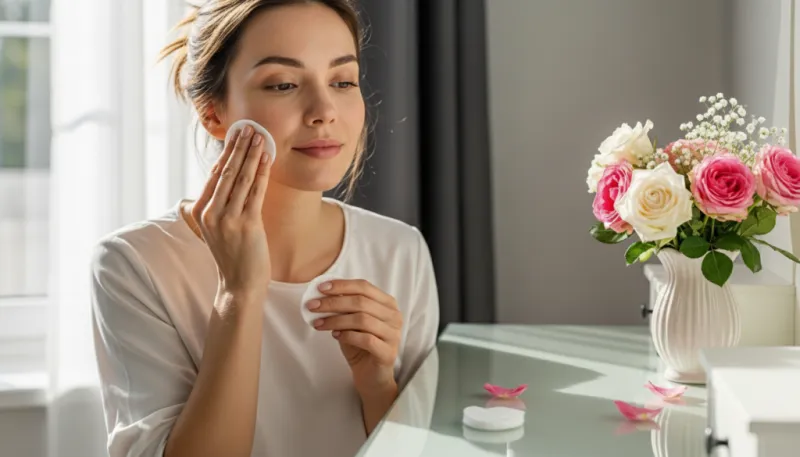
Photo: Arab woman skincare routine rose water argan oil beauty ritual, via priyankachadha.com
When K-beauty exploded in the US around 2015, Western consumers had a collective revelation: skincare isn't one step, it's a sequence. Layering products in the right order, with the right ingredients, at the right concentration — that was the secret to glass skin. The beauty industry called it a revolution.
Arab women called it Tuesday.
The multi-step, ingredient-conscious skincare rituals passed through Middle Eastern households for generations are, at their core, the same thing Western consumers are now paying premium prices to learn. The difference is that Arab beauty layering never needed a marketing campaign — it was just how it was done.
What "Layering" Actually Means in Arab Beauty
The concept isn't complicated once you understand the logic behind it. Skincare layering means applying products in a specific sequence based on molecular weight and function — lightest to heaviest, treatment before protection. The goal is to deliver active ingredients to the skin effectively without blocking absorption or disrupting the skin's natural barrier.
Arab beauty traditions figured this out empirically over centuries. The sequence often looks something like this: cleanse with an oil or soap, tone with rose water or orange blossom water, treat with a serum or targeted botanical, then seal with a heavier moisturizer or facial oil. Sound familiar? It should — that's essentially the K-beauty routine that launched a thousand Sephora hauls.
Oil Cleansing: The Step That Changed Everything
Western skincare spent decades telling people to strip their skin clean with harsh foaming cleansers. Arab women were using argan oil, olive oil, and black seed oil to cleanse long before the "oil cleansing method" became a Reddit skincare staple.
The science backs the practice. Oil cleansing works on the principle that like dissolves like — oil breaks down sebum, sunscreen, and makeup without disrupting the lipid barrier that keeps skin hydrated and resilient. Dermatologists now widely recommend oil or balm cleansers for exactly this reason, particularly for dry or sensitive skin types.
Black seed oil (Nigella sativa), a staple in North African and Levantine skincare traditions, contains thymoquinone, a compound with documented anti-inflammatory and antimicrobial properties. Studies published in journals like the Journal of Dermatology & Dermatologic Surgery have highlighted its potential for managing acne and eczema. Your great-aunt was ahead of the curve.
Rose Water: Not Just a Pretty Scent
If you grew up in an Arab household, rose water (ma' al-ward) was probably in the kitchen and the bathroom. Its use as a toner predates the concept of "toner" by centuries, and the reasons it persists are more than nostalgic.
Rose water has a pH of around 5.5, which closely matches the skin's natural pH. Using it after cleansing helps restore the acid mantle — the skin's protective barrier — that cleansing can temporarily disrupt. It also contains phenolics and flavonoids with mild antioxidant activity, and its anti-inflammatory properties make it particularly soothing for reactive skin.
Compare that to many commercial toners, which historically relied on alcohol as a primary ingredient. The Arab instinct to reach for rose water was, functionally, a better choice.
Strategic Moisturizer Stacking
One of the more sophisticated elements of Arab beauty layering is the way heavier emollients are used as a final seal rather than a standalone treatment. Applying a lighter water-based product first, then locking it in with argan oil or shea-based cream, mirrors exactly what dermatologists call "moisture sandwiching" — a technique that's had a major moment in US skincare communities over the last few years.
Argan oil, specifically, is high in oleic and linoleic fatty acids, which help reinforce the skin's lipid barrier. It absorbs without leaving significant residue and has demonstrated effectiveness in improving skin elasticity in clinical studies. Moroccan women have been calling it "liquid gold" since long before it appeared in a Josie Maran product.
How It Compares to K-Beauty and J-Beauty
Here's an honest comparison: K-beauty and J-beauty routines are excellent, and the global attention they brought to layering and skin health has been genuinely positive. But they are not categorically more advanced than Arab beauty traditions — they're just better marketed.
K-beauty's signature steps (double cleanse, essence, ampoule, sheet mask, moisturizer, SPF) and Arab beauty's traditional sequence share the same foundational logic. The key difference is ingredient sourcing. K-beauty leans into fermented extracts, snail mucin, and niacinamide. Arab beauty traditions draw from a rich botanical pharmacy — oud, argan, black seed, rose, frankincense, ghassoul clay — that has its own growing body of scientific literature.
The crossover potential is real. Layering a rose water toner under a niacinamide serum before sealing with argan oil? That's not a compromise between traditions — that's a power move.
Building Your Routine With Intent
You don't need to overhaul everything. Start with what your family probably already knows:
- Cleanse with an oil or gentle balm to preserve your barrier
- Mist with rose water or orange blossom water while skin is still damp
- Treat with your active of choice — vitamin C, retinol, niacinamide
- Seal with a facial oil suited to your skin type (argan for most, marula for dry, black seed diluted for acne-prone)
The routine your grandmother followed wasn't superstition. It was systems thinking applied to skin. The science just finally caught up to explain why it worked.