Henna Was Always Skincare — Gen Z Is Just Now Catching Up
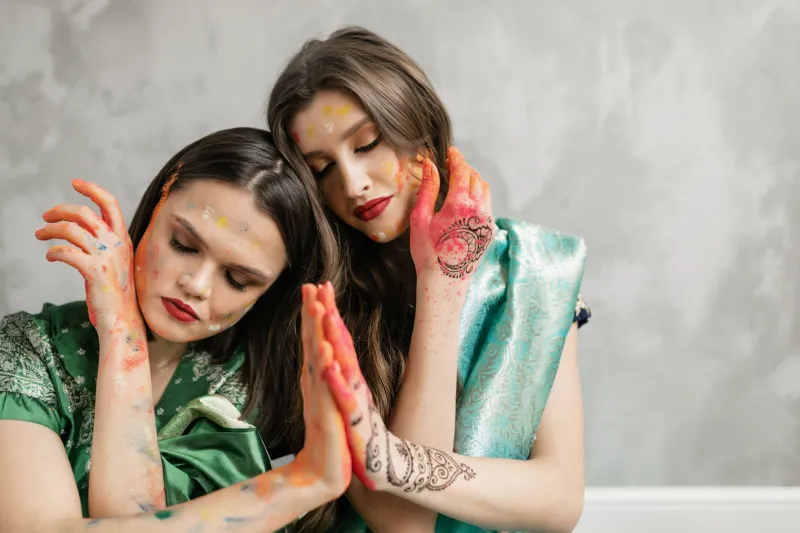
Open TikTok on any given afternoon and you'll find a 22-year-old in a dorm room mixing henna powder with coconut oil, narrating the process like she just discovered something revolutionary. The comments are full of curiosity. The views are in the hundreds of thousands. And somewhere, an Arab grandmother is watching and thinking: habibti, we've been doing this for centuries.
The henna moment happening in Gen Z beauty spaces right now is real, and it's genuinely exciting — but it's also worth pausing to understand what henna actually is, where it comes from, and why the communities who've always used it deserve to be centered in that conversation.
What Henna Actually Does (Beyond the Design)
Henna — lawsonia inermis for the botanically curious — is a plant. Its leaves, when dried and powdered, contain a compound called lawsone that binds to proteins, including keratin. That's the science behind why it stains skin and hair. But it's also why it's been used therapeutically for thousands of years across North Africa, the Middle East, and South Asia.
For hair, henna acts as a strengthening treatment. It coats the hair shaft, adds thickness, and can reduce breakage over time. It's also naturally antifungal, which makes it useful for scalp health. Arab women have been using henna hair treatments — sometimes mixed with eggs, oils, or yogurt — long before the concept of a "protein treatment" entered the beauty lexicon.
For skin, raw henna paste has cooling properties (it's literally used in hot climates to lower body temperature) and has traditionally been applied to soothe skin irritation. Some formulations are used as a kind of mask for the hands and feet.
None of this is new. What's new is that it's being discovered by an audience that didn't grow up with it — and that discovery is generating a lot of commercial energy.
The DIY Henna Beauty Recipes Worth Knowing
If you're curious about incorporating henna into your beauty routine, here's what actually works — pulled from both traditional practice and contemporary formulation knowledge.
Henna Hair Mask (for strength and shine): Mix 100g of body-art quality henna powder (not compound henna, which contains additives) with enough warm water to form a thick paste. Add 2 tablespoons of plain yogurt and 1 tablespoon of olive oil. Let the paste sit for 6-8 hours to release the dye molecule, then apply to damp hair, cover with a shower cap, and leave for 2-4 hours. Rinse thoroughly. Note: henna will deposit color — a warm red-brown on lighter hair, a subtle auburn tint on darker hair.
Scalp-Soothing Treatment: For an anti-dandruff, scalp-calming treatment, mix henna with a few drops of tea tree oil and apply directly to the scalp before your full mask application. The combination addresses both fungal concerns and product buildup.
Hand Conditioning Paste: This one is less about design and more about function. A simple henna paste mixed with rose water and a drop of lavender essential oil, applied to the hands and left on for an hour, leaves skin noticeably softer. It's the kind of treatment that makes sense on a slow Sunday — and it's been a part of Arab women's self-care rituals forever.
The Cultural Ownership Question
Here's where it gets complicated, and we're not going to skip over it.
When henna is repackaged as a "new wellness trend" without acknowledging its origins, it's a problem. When brands create "henna-inspired" products and market them to Western consumers without any connection to the communities that developed and preserved this knowledge, it's extractive. And when Arab and South Asian creators are talking about henna on social media and getting a fraction of the engagement that non-Arab creators get for the same content — that's a pattern worth naming.
The good news is that many of the most credible voices in the henna beauty space right now are Arab and South Asian women who are reclaiming the narrative. Creators like those building communities on platforms specifically designed for Arab consumers — think سوق البنات — are creating space for these conversations to happen with the right cultural context.
If you're buying henna products, it matters who you're buying from. Arab-founded beauty brands that work with henna aren't just selling a product — they're carrying forward a tradition, and that has value.
The Market Is Responding
The henna beauty product category is genuinely growing. We're seeing henna-infused shampoos and conditioners, henna hair color kits designed for modern application, henna-based face masks, and even henna oil blends marketed for nail and cuticle care.
Some of these products are excellent. Some are using "henna" as a marketing word while delivering something completely different. The key is to read ingredient lists carefully and prioritize brands that are transparent about their sourcing and formulation.
Brands worth watching in this space tend to be smaller, founder-led, and deeply connected to the communities they serve. They're not the ones with the biggest ad budgets — they're the ones with the most authentic knowledge.
Self-Care Has Always Had a Cultural Language
What Gen Z is really responding to in henna — and in Arab beauty rituals more broadly — is the intentionality of it. The slow, sensory, community-centered nature of a henna session is the opposite of a quick skincare routine done while half-watching Netflix.
There's something in that. Arab women have always known that beauty rituals are also about presence, connection, and time. The hammam, the henna night, the communal hair oiling — these are practices built around being with yourself and with each other.
If Gen Z is finding their way to that understanding through a TikTok henna tutorial, that's genuinely a good thing. Just don't forget to follow it back to the source.